Light in the Dark: Three Partner Days on the Island of Lighthouses

The name “Light in the Dark” took on a very literal meaning when the project’s partners gathered on the Estonian island of Hiiumaa, on April 20-22. As lighthouse historian Veronica della Dora argues, lighthouses have always been more than navigational aids: “Suspended between sea and sky, battered by the waves and the wind, lighthouses mark the battle lines between the elements. They guard the boundaries between the solid human world and the primordial chaos of the waters; between stability and instability; between the known and the unknown.”
Hiiumaa embodies that spirit perhaps better than anywhere in the Baltic. With seven lighthouses and 25 beacons dotting its shores, Hiiumaa has long been an island defined by its lights in the dark. And as it happens, in 2026, the island celebrates its “Year of Lighthouses”, centered on the 495-year-old Kõpu lighthouse, one of the oldest continuously operating lighthouses in the world. So, for a project that takes its name from the idea of bringing light to the darkest months of the tourism year, the setting spoke for itself. (Dora, 2022) (Visit Estonia, 2025)
Located off the northwestern coast of Estonia, Hiiumaa is the country’s second largest island. The island is a little over 1000 square kilometers and is home to less than ten thousand people. The only ways to get to the island are by ferry or plane, making it one of the more remote destinations in the region. Most project partners made the short domestic flight from Tallin to Kärdla, the island’s only town and administrative centre. The route is subsidised to guarantee year-round connectivity for island residents, though visitors also benefit from it. (Visit Estonia, 2025).
Upon arriving at Kärdla airport, we were greeted by sunshine and a steady coastal wind. For those more familiar with enclosed island landscapes, the sea opened up in a way that felt almost unfamiliar. Instead of islands, skerries and narrow passages, the horizon stretched endlessly. The visit was both a progress review as the project enters its final phase, and a chance to experience the tourism products developed with entrepreneurs along the way. In many ways, it felt like a familiarisation trip.
At the airport, we were met by Kristel Peikel, our project partner from the Hiiumaa Development Centre, who accompanied us to our accommodation at Kassari Holiday Resort. The resort is a modern, nature-friendly hotel nestled in the heart of the juniper-covered island of Kassari, and the only hotel of its kind in the area.
Once settled, the evening kicked off with a welcome dinner at the nearby Hiiu Õlle Koda, a small craft brewery and tavern housed in a building originally constructed as a grain dryer in 1885. Over good conversation and local food, the group had a first chance to connect. The night, however, held one more adventure: a bus tour of the island’s lighthouses with Helgi Põllo, research director at the Museum of Hiiumaa. As the bus drove through the island’s coastal landscapes, right in the middle of peak bird migration season, hundreds upon hundreds, if not thousands, of geese could be seen spread across the fields. Among them, Barnacle, Greylag, and Greater White-fronted geese were the most common sightings.
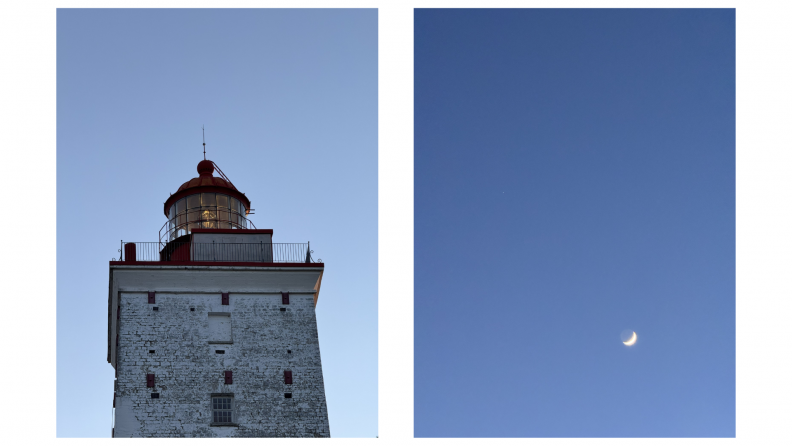
The first stop of the tour was Kõpu lighthouse, the island’s nearly 500-year-old symbol and the focal point of Hiiumaa’s Year of Lighthouses. Gathered around the base of the lighthouse, Helgi guided the group through its history. And even though the sun had not yet fully set, the lighthouse beam was already sweeping across the darkening sky in its steady, circular arc.
The final stop of the tour was Hõbekala, a cosy guesthouse run by Kätlin Kiisk and Siim Rätsep, who have been part of the Light in the Dark project as tourism entrepreneurs.
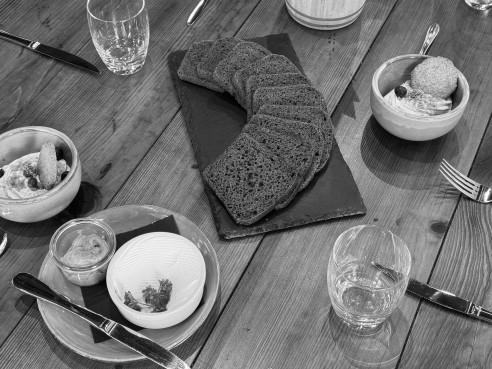
Within the project, they have developed an experience called "In the Fisherman’s Boots", which invites guests to live like a local fisherman. The two-day experience combines traditional fishing and local food with coastal storytelling and nature. The level of participation is entirely up to the guest. One can either join the fishermen at sea or enjoy the experience from the shore. Locally caught fish also forms the basis of their handmade products, and we were treated to a tasting before heading back.
By the time we left, the sun had completely set. Even though the shore was not far away, the surrounding forest was swallowing what little light remained. The only light visible was the faint glow of a nearly new moon, and the only sound was an owl hooting somewhere nearby. Visit Estonia captures the scene rather well in their marketing of the island: “Hiiumaa is completely dark unless the moon and stars are shining, and completely silent unless the storm winds are howling.” (Visit Estonia, 2025)
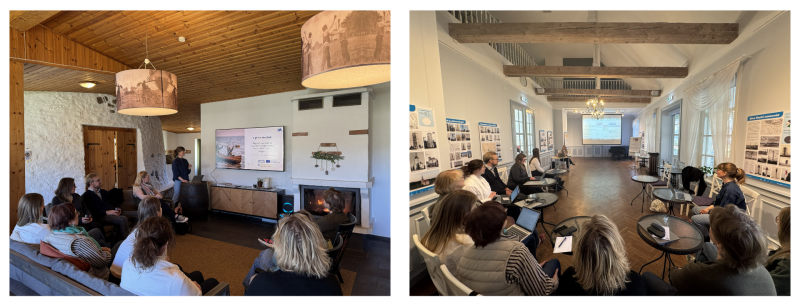
On the second day, the group gathered at Pikk Maja, the Long House of Hiiumaa Museum, located in the centre of Kärdla. As the project is in its final phases, much of the discussion focused on where the project currently stands and what still lies ahead. Going through the work package structures and the joint event calendar together proved especially valuable. In smaller group discussions, partners responsible for different activities had the opportunity to walk through what has been accomplished so far, what is still planned, and what has worked well. These conversations made the bigger picture clearer and helped connect individual activities across regions. It is one thing to follow progress online, but discussing it face-to-face brings a different level of clarity.
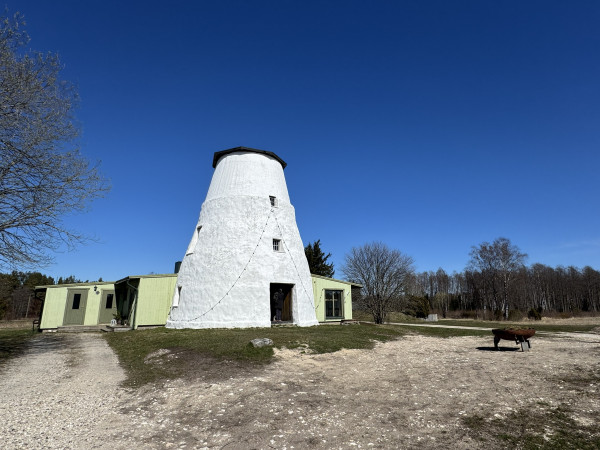
In the afternoon, the meeting continued at Partsi veski, a restored 19th-century limestone windmill tucked away in the Hiiumaa countryside. The mill has recently been acquired by Maria Remmelkoor, who together with her husband Madis runs Retrovisiit OÜ, a small family business offering rural accommodation on the island since 2016. Maria has also been part of the project as a tourism entrepreneur and has developed the experience “Where the Forest Meets the Sea”, a half-day coastal retreat blending local food, forest walks, and reflection by the sea. Here, we turned our attention to the future, discussing the project’s AI tool and opened up conversations about Light in the Dark 2.0.
The afternoon also included a visit to the Soera Farm open air museum and the Palade House of Rocks. The latter is a small museum offering a window into Hiiumaa’s geological past, exploring the island’s landscapes and the use of rocks through the ages. The visit was rounded off with a performance of traditional Estonian folk dances by a group of local dancers.
The final item on the second day’s agenda was a workshop at Hiiu Gourmet. Hiiu Gourmet is a small producer crafting flavour salts, herbal teas, jams, and gift sets from ingredients foraged in the island’s forests and meadows. Each product reflects the island’s natural character, using only what the local landscape has to offer. Naturally, Ly Johansen, the founder of Hiiu Gourmet, has also been part of the project as a tourism entrepreneur. Within the project, she has developed two experiences. The first, “Handpick Your Adventure”, is a guided nature hike where participants explore Hiiumaa’s wilderness with the help of a nature guide, learning to identify and taste edible plants along the way, before gathering around a campfire for a light meal. The second, “Flavour Journey of Hiiumaa’s Nature”, is a mobile workshop where participants create their own herbal tea blend or seasoned salt, guided by Ly and inspired by the plants and flavours of the island.
During our visit, we got a taste of the latter, making butter, exploring wild flavours and creating personal blends of seasoning salt. What stood out was how familiar yet unfamiliar the ingredients felt. Many of the herbs and plants used can also be found in our own forests and backyards, but they often go unnoticed. The experience became a reminder of knowledge that is slowly being lost, and the importance of reconnecting with it. It left a strong impression, not only as a tourism product, but also as a learning experience.
The last day was dedicated to further exploring Hiiumaa as a destination, with visits to sites such as Tuuletorn, Orjaku harbour and the Vaemla wool factory. Tuuletorn, a modern experience centre, is apparently referred to by locals as a “cheese grater”, which felt quite accurate once one saw it. Orjaku harbour, situated on the small island of Kassari, offers a glimpse of Hiiumaa’s quieter coastal life. In summer, the harbour comes alive with fishing boats, local exhibitions, and cultural events, making it one of the island’s most charming seasonal gathering spots. At the Vaemla wool factory, known as Hiiu Vill, the group was taken through the entire wool processing chain in a building originally constructed as a hay barn for Vaemla Manor in 1841. It is one of very few wool manufacturing companies still operating in Estonia, and the family members are happy to demonstrate the machinery, which, as the visit made clear, is very much still in daily use.
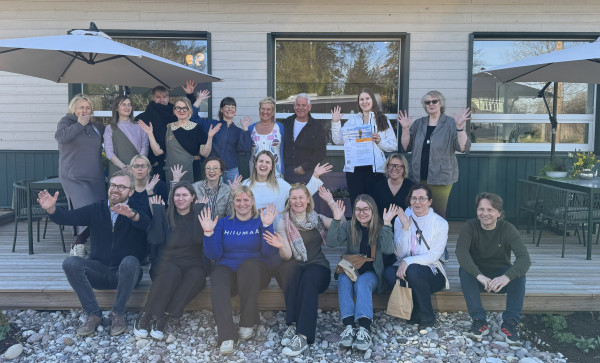
Throughout the meeting, the atmosphere was open and relaxed. After months of online collaboration, meeting in person again brought a sense of continuity and connection to the work. As the project approaches its final stages, gatherings like this serve as important checkpoints. They provide space not only for reviewing outputs and aligning activities, but also for strengthening the collaboration within the project.
Hiiumaa may often be described as the smaller sibling to Saaremaa, but during these days, it clearly showed its own character and potential. A place defined by openness, in the landscape and in how easy it is to just be there for a while. A warm thank you to Kristel Peikel from the Hiiumaa Development Centre, who guided us throughout the visit, and to the Estonian Rural Tourism Organisation team, Raili Mengel and Liisa Lehtpuu, for excellent arrangements and such a warm welcome to the “Island of Lighthouses”.
References
Visit Estonia. (2025). Hiiumaa. Hämtat från Visit Estonia: https://visitestonia.com/en/where-to-go/hiiumaa
Dora, V. d. (05 2022). Where Light in Darkness Lies The Story of the Lighthouse. London: Reaktion Books. Hämtat från The University of Chicago Press: https://press.uchicago.edu/ucp/books/book/distributed/W/bo157942777.html

Reseskildringen har godkänts för publicering av Novias redaktionsråd 11.6.2026.
