A Global Learning Journey: Value Chains, Sustainability and Intercultural Collaboration in Indonesia

In June 2026, I participated with students from Novia University of Applied Sciences in a Global Outreach Programme in Value Chain and Circular Business Enhancement of Indonesia’s Local Agricultural products hosted by Institut Teknologi Sepuluh November(ITS) in Surabaya, Indonesia. ITS is a science and technology university that focuses on innovation, research, education, and sustainable development. Its work with knowledge and technology made it particularly relevant context for a programme about local entrepreneurship, value chain development and sustainability.
The programme brought together participants from Finland, Sweden, Belgium, the Philippines, Malaysia, and Indonesia, creating an international environment for academic learning, professional exchange, and intercultural collaboration. The program dealt with Indonesia’s agricultural sector. It combined academic lectures, field visits, teaching activities, cultural experiences, group work, reflection, and final presentations. The agricultural sector is challenged by climate change, low productivity, and limited access to modern technologies, making it difficult for many farmers to remain competitive. At the same time, an aging farming population and growing food demand highlights the urgent need for sustainable and innovative solutions to secure the sector’s future.
The main objectives of my participation were to:
- develop my understanding of value chains and circular business practices in Indonesia
- contribute my expertise and teaching experience to the programme
- explore how local agricultural businesses can improve efficiency, productivity, and competitiveness
- support students in connecting theoretical knowledge with practical experiences
- strengthen cooperation between Novia and international partner institutions
- gain ideas for teaching, research, development, and innovation activities at Novia.
These objectives were closely connected to my work in business education, internationalization, strategic business communication, cross-cultural management, and student-centered learning.
Academic Programme and My Contribution
The programme started with introductory activities, an overview of the programme, intercultural activities, and guidance on maintaining a reflective diary. The academic sessions covered value-chain optimization, lean principles, agricultural value chains in developed and developing countries, and methods for assessing efficiency, productivity, and competitiveness.
I contributed to lectures and discussions on understanding and optimizing value chains, applying lean principles, and examining the competitiveness of Indonesian agricultural products. The programme also included lectures focusing on the value chains of coffee, soybeans, tofu, and bananas.
A major strength of the programme was the close connection between theory and practice. The lectures introduced concepts and analytical approaches that participants could later apply during the field visits. The field experiences, in turn, offered concrete examples for reflection and discussion.
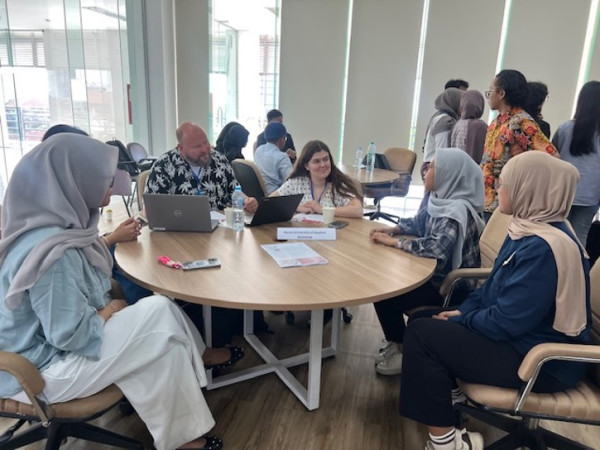
Field Visits and Experiential Learning
One of the programme’s central activities was a visit to Wonosalam Village. At the Wonosalam coffee cooperative, we observed different stages of the coffee value chain, including plantation activities, processing, and packaging. The visit was followed by a reflection and discussion session involving students and lecturers.
This experience demonstrated how value is created through several connected activities before a product reaches the customer. It also highlighted the importance of cooperation, product quality, packaging, and communication in strengthening the market position of local agricultural products.
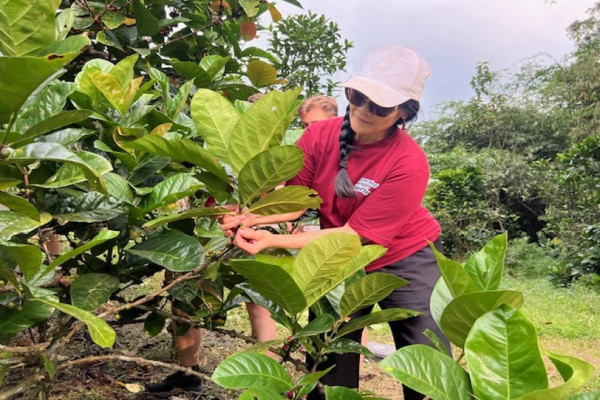
The programme continued in Kandangan, Kediri, where we visited small businesses engaged in the processing, packaging, and presentation of tofu and banana-based products. These visits allowed participants to observe local entrepreneurial practices and discuss opportunities and challenges relating to productivity, resource use, product development, and market communication. The field visits were particularly valuable because they connected academic concepts with authentic business situations. Students could observe how local producers operate and consider how value-chain coordination and circular business thinking might support future development.
Teaching and Intercultural Learning
The programme also included interaction of international students with ITS students. The interaction supported communication and cooperation among participants from different countries and educational backgrounds. For the students, the programme offered learning beyond the traditional classroom. They participated in international groups, observed business practices, discussed their experiences, and connected theoretical knowledge with real-life examples.
The journey also included cultural activities and a visit to Mount Bromo. Experiencing the volcanic landscape and sunrise with the international group was one of the most memorable parts of the journey.
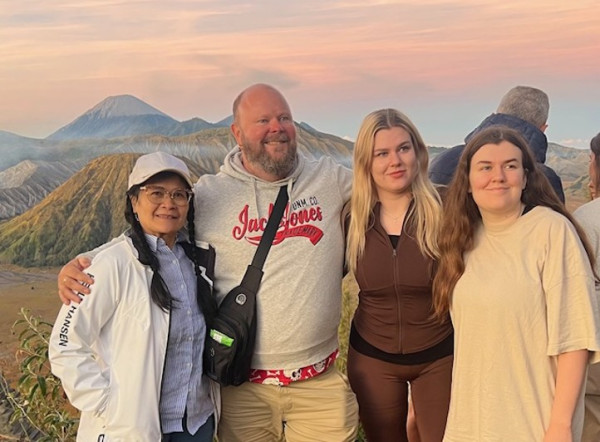
The cultural experiences helped strengthen relationships within the group and provided a deeper understanding of the local context. The combination of lectures, field visits, reflection, and intercultural exchange provided valuable insights into sustainable business practices in an emerging-market context. As an educator, I found this combination especially meaningful. It demonstrated the value of experiential and student-centered learning, in which students are encouraged to analyze authentic situations, communicate across cultures, and reflect critically on what they have learned.
The programme deepened my understanding of agricultural value chains, local entrepreneurship, circular business development, and the conditions in which Indonesian small businesses operate. It also provided useful examples for my teaching in international business, cross-cultural management, entrepreneurship, and sustainable business development.
The experience will contribute to my work at Novia in several ways. The programme’s cases and observations can be integrated into teaching, while its combination of lectures, field visits, reflective diaries, group work, and presentations provides a useful model for experiential learning. It also created opportunities for future cooperation in education and RDI activities related to SMEs, sustainability, agricultural products, circular business models, and internationalization.
Conclusion
My participation in the ITS Global Outreach Programme was a highly valuable academic, professional, and intercultural experience. The programme successfully combined theoretical learning with practical fieldwork, teaching, cultural engagement, teamwork, and reflection. The journey deepened my understanding of Indonesian agricultural value chains and local business development while also providing inspiration for my work as a lecturer. Most importantly, it demonstrated the value of international collaboration in creating meaningful learning experiences that connect students and educators with businesses, communities, and real-world challenges.
I am sincerely grateful to ITS for hosting, sponsoring, and arranging this meaningful learning journey. I would particularly like to thank Professor Marya Anityasari for the invitation and contribution to the programme arrangements. I also acknowledge the valuable support provided by Erasmus+ Global, Novia University of Applied Sciences, and Svenska kulturfonden, whose contributions made this learning experience possible.
Reseskildringen har godkänts för publicering av Novias redaktionsråd 2.10.2026.
ISSN: 2670-028X
