From Finland and Beyond – Supporting Micro and Small Enterprises’ Internationalization through Public Policy

Micro and small enterprises’ (micro-SMEs) access to international markets is crucial for competitiveness, economic growth, and innovation across European countries (European Commission, 2026). Hence, supporting internationalization of this group of enterprises is of utmost importance, as they typically face far greater constraints than larger firms (Lehtinen et al., 2021). While large firms often have dedicated export departments, international networks, and financial resources, micro-SMEs frequently lack the knowledge, capital, contacts, and capabilities needed to enter foreign markets. Consequently, they are less able to absorb the costs and risks of entering new markets. Public policymaking helps address these issues and reduces the risks associated with international expansion.
Importance at the European Level
The European Commission (2026) notes that global markets represent a major source of future growth and that a significant share of world economic growth is expected to occur outside the EU. Moreover, micro-SMEs are often vulnerable to global crises or unexpected external disturbances. However, those enterprises operating in international markets are more likely to recover quickly from economic disruptions. Expanding beyond domestic markets will therefore enhance their resilience. By diversifying their market base and building local value chains, these enterprises can also protect themselves from global supply chain disruptions caused by, for instance, pandemics, wars, or energy crises. (Andersen & Holmberg, 2026)
Micro-SMEs engaged in international activities also tend to outperform those operating solely in domestic markets. They benefit from higher turnover and employment growth and are better positioned to seize new opportunities, resulting in a strong innovation capacity. (Steinerowska-Streb et al., 2022; Galkina et al., 2022).
Therefore, helping SMEs access international markets is considered strategically important for Europe's long-term competitiveness. EU policies support internationalization by, for example, providing information on foreign markets, facilitating international business networks, offering funding and export support programs, reducing administrative and regulatory barriers, and improving SMEs' access to international value chains (European Commission, 2014).
Research has also highlighted the need for coherent, coordinated internationalization policies because support programs are often fragmented across countries and institutions (European Commission, 2025). Effective policy helps ensure that firms can access the right support at the right stage of international growth.
Importance in Finland
Policymaking is particularly important in Finland because the domestic market is small and many firms need to seek growth internationally. The Finnish Ministry of Economic Affairs and Employment (2026) explicitly identifies exports and internationalization as key drivers of economic growth and competitiveness. The government therefore supports firms through organizations such as Team Finland, Business Finland, Finnvera, Economic Development Centres, and Finnish embassies abroad.
For Finnish micro-SMEs, policy support can help overcome challenges such as:
- Limited financial resources.
- Lack of international market knowledge.
- Small management teams.
- Regulatory and legal complexities.
- Difficulties in finding foreign customers and partners.
- Skills and competence gaps related to international business.
Policy instruments may reduce these barriers and enable firms to internationalize faster and more successfully than without support (Schmerber et al., 2021).
Policy Recommendations for Micro-SMEs
Micro-SMEs have fewer than ten employees and operate with very limited managerial and financial capacity. Targeted policies should compensate for these disadvantages. Traditionally, the internationalization support programs in the EU and in Finland have been tailored to larger firms, while smaller micro-SMEs have often been overlooked (Andersen & Holmberg, 2026). Models developed for larger firms often do not explain the behavior and needs of micro-SMEs well (Child et al., 2022).
Political decisions shaping the business environment are made at multiple levels of society. From the perspective of micro-SMEs, several factors are critical to enabling successful internationalization, particularly for firms that primarily operate in national markets. The policies to support micro-SMEs’ internationalization that are recommended in this blog are summarized in Figures 1 to 3. They mostly focus on local and regional policymaking.
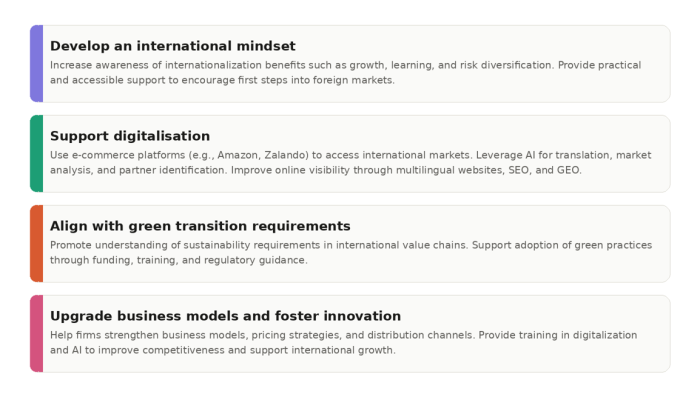
Figure 1. Policy recommendations for capacity building (adapted from Andersen & Holmberg, 2026)
Figure 1 summarizes the identified need for enhancing internationalization-related competency among micro-SMEs. The first step would be to embed an international mindset, as many micro-SMEs primarily operate in local and regional markets. Moreover, digital and AI tools should be introduced, the need to align with sustainable guidelines encouraged, and the business models of the enterprises strengthened.
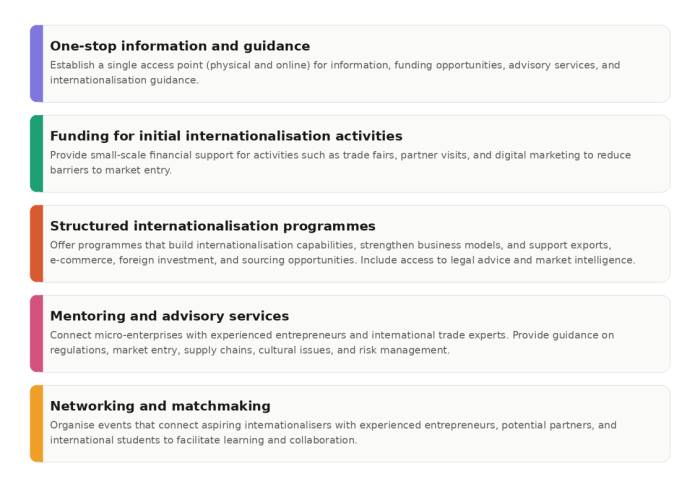
Figure 2. Policy recommendations for direct support (adapted from Andersen & Holmberg, 2026)
Besides capacity building and competence development, the micro-SMEs also need direct support to take the first steps toward internationalization (Figure 2). One important issue to be solved is how to organize the sharing of all the information the micro-SMEs need for the internationalization process, but also funding, training programs, and mentoring services are needed. If possible, it would also be important to support networks and matchmaking, backing local companies to internationalize.
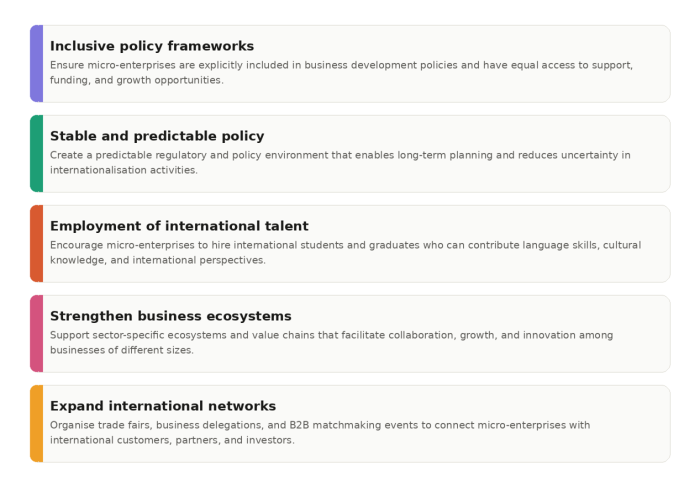
Figure 3. Policy recommendations for improving business environment (adapted from Andersen & Holmberg, 2026)
Finally, policy should also strive for improvement of the overall business environment. It is important to listen to the voice of the micro-SMEs in the political process, to strengthen the business ecosystems and encourage enterprises to make use of the international talents residing in the area. Stability in policymaking is an important angle, as micro-SMEs should be able to trust the support system developed for them. Cities and municipalities should also expand their international networks, for instance by inviting business delegations and organizing B2B fairs. (Andersen & Holmberg, 2026)
It should be noted that the relevance and priority of the policy recommendations may have to be adapted across sectors. For example, manufacturing firms often face higher entry barriers related to production, resources, logistics, certification requirements, and international supply chains, while service and digital firms may encounter fewer physical barriers, but face challenges related to market visibility, intellectual property, data regulation, and customer acquisition. Hence, the barriers to international market entry and exit differ considerably between sectors, influencing the type and intensity of support required. Consequently, policymakers should view these recommendations as a flexible framework and adapt internationalization support to the specific characteristics and challenges of different micro-SMEs.
Conclusion
Policymakers should preferably adopt an integrated approach that combines capacity building, direct support, and business environment development (see also Dabić et al., 2020). Such a holistic strategy will help micro-SMEs overcome resource constraints, build international competitiveness, and contribute more effectively to regional economic growth and innovation. However, it should be recognized that internationalization is not necessarily an appropriate strategy for every micro-SME. As noted, successful internationalization requires adequate resources, capabilities, and commitment, and should be grounded in a clear strategic rationale rather than pursued as an objective in itself.
Micro-SMEs have significant untapped potential to contribute to growth, innovation, competitiveness, and resilience. However, they often face greater barriers to internationalization than larger firms. Policymakers therefore have an important role in creating the conditions that enable these firms to succeed internationally. Policymaking can be the difference between internationalization remaining an ambition and becoming a realistic development path. To achieve this, micro-SMEs must be placed more clearly at the center of policy, also regionally and locally. Support should be easy to find, practical to use, and responsive to the different stages of a firm’s international journey. Capacity building, direct assistance, and improvements to the wider business environment should not be treated as separate measures, but as mutually reinforcing elements of a coherent support system. With coherent and well-targeted policies, even the smallest enterprises can develop the confidence, capabilities, and connections required to grow beyond Finland.
By creating policy frameworks that are accessible, inclusive, and tailored to the realities of micro-SMEs, governments can unlock the international potential of thousands of firms that are currently underrepresented in export markets (Lehtinen et al., 2021). The result will be a more diverse, competitive, and internationally connected business sector, capable of contributing to both regional prosperity and broader European competitiveness.
End note: The recommendations are based on expert interviews with business development organizations, workshops with experienced business coaches, and discussions with organizations supporting micro-SMEs ecosystems.
References
Andersen, J & Holmberg, E. (2026). Blueprint - Building market and supply chain opportunities for micro-SMEs within the Baltic Sea Region. Novia Publication and production, series R: Reports 6/2026. https://novialia.novia.fi/publikationer/serie-r-rapporter/serie-r-blueprint-building-market-and-supply-chain-opportunities-for-micro-smes-within-the-ba
Child, J., Karmowska, J. & Shenkar, O. (2022). The role of context in SME internationalization – a review. Journal of World Business, 57(1), article 101267. https://doi.org/10.1016/j.jwb.2021.101267
Dabić, M., Maley, J., Dana, L-P., Novak, I. Pellegrini, M. & Caputo, A. (2020). Pathways of SME internationalization: a bibliometric and systematic review. Small Business Economics, 55, 705-725. https://doi.org/10.1007/s11187-019-00181-6
European Commission (2026). SME internationalisation beyond the EU. https://single-market-economy.ec.europa.eu/smes/growing-and-scaling-sme/improving-smes-access-marktets/sme-internationalisation-beyond-eu_en
European Commission (2025). Study of the European Union SME internationalisation strategy. Publications Office of the European Union. https://op.europa.eu/en/publication-detail/-/publication/1c3a724d-def9-11ef-be2a-01aa75ed71a1
European Commission (2014). Supporting the internationalization of SMEs. European Union. https://ec.europa.eu/regional_policy/sources/wikiguidance/gn0111_internationalisationsme_en.pdf
Galkina, T., Atkova, I., & Gabrielsson, P. (2023). Business modeling under adversity: Resilience in international firms. Strategic Entrepreneurship Journal, 17(4), 802-829. https://doi.org/10.1002/sej.1474
Lehtinen, U., Saarela, M. & Virkkala, P. (2021). Internationalisation of microenterprises: systematic literature review. International Journal of Management and Enterprise Development, 20(3), 234-252. https://doi.org/10.1504/IJMED.2021.118408
Ministry of Economic Affairs and Employment (2026). Boosting economic growth by promoting the internationalisation of enterprises. https://tem.fi/en/internationalisation-of-enterprises
Schmerber, L., Tõnnisson, R. & Veliste, M. (2021). Internationalisation of SMEs. Interreg Europe. https://www.interregeurope.eu/sites/default/files/inline/2021-08-01_Policy_brief_on_SME_internationalisation_TO3.pdf
Steinerowska-Streb, I., Glod, G. & Steiner, A. (2022). What do we know about small and medium enterprises’ survival in a post-global economic crisis context? Local Economy, 37(4), 259-278 - https://doi.org/10.1177/02690942221112042
Artikeln har godkänts för publicering av Novias redaktionsråd 6.10.2026.
ISSN: 1799-4187
