Why is Customer Journey Mapping Essential for a Company's Business Growth?

There is hard competition among companies today that produce the same kind of product. In this environment, customer satisfaction depends not only on the quality of the product or service, but also on the overall customer experience. So, how can a business acquire more customers if its products are almost identical to competitors' products? The answer lies in understanding the customer's experience during the purchasing journey and the brand image. One of the best ways to understand this is through customer journey mapping, which is the focus of Mård’s (2025) MBA thesis in Digital Business and Management.
What is Customer Journey Mapping?
A customer journey map visually represents a customer's purchasing journey from the beginning to the end, such as after-sales. The map shows the customer's emotional points at each stage of the process, with both highs and lows. The representation is customer-centric and is always done through the customer's eyes. The map shows the current customer experience and sheds light on customers’ Pain Points and Moments of Truth. Pain Points are stages where the customer experiences dissatisfaction, frustration, or confusion, which usually bottom out in one or several problems in the business processes. The Moments of Truth are stages with a significant impact on the customer experience that affect the rest of the journey and even beyond. These stages or moments can be positive or negative, but are always emotional. They are often referred to as a make-or-break moment in the customer journey.
The goal of the customer journey map is to uncover opportunities for areas of improvement to enhance customer experience for future customers. By gaining insight into the customer's experience, businesses can identify which processes and elements lead to Pain Points. With this understanding, companies can refine and enhance these processes to prevent future customers from encountering similar issues, thereby improving their overall journey. It is also important to pinpoint when customers encounter Moments of Truth – these are pivotal stages that have a significant impact on their experience. Companies should prioritize these moments, dedicating additional attention and resources to ensure success. This process should be continuous, allowing organizations to monitor how improvements affect new customer journeys over time.
What are the Benefits of Customer Journey Mapping?
There are more reasons to do it than not. To acquire new customers, it is highly beneficial if existing customers are promoters of the company and the brand. Some studies show that when a customer has a good emotional experience:
- 76 % of the customers are promoters, and they would recommend the company to other customers.
- 63 % of the customers could forgive a struggle or problem.
When a customer has had a bad emotional experience:
- 6 % of the customers are promoters of the company (Versus 76 % when experiences were good).
- 11 % of the customers were able to forgive a struggle or a problem (Versus 63 % when the experience was good). (Tincher & Newton, 2022, p. 95).
The figures above highlight the powerful influence of emotions on customer loyalty and gaining a competitive advantage comes from truly understanding customers’ experiences.
Competitive advantage. By interviewing customers and mapping their experiences, the company gains direct insight into what is important to the customers and what their pain points are. The company then no longer relies on internal assumptions about the customers, which tend to be quite normal. By leveraging this information to drive improvements, the company will gain a competitive advantage over competitors who don’t understand their customers' needs.
Return on Investments (ROI). Customer journey mapping has the potential to initiate projects that reduce costs, inspire product improvements, create better customer service, and ultimately increase revenue and results.
A Harvard Business Review article named “The Truth about Customer Experience” cited by Tincher & Newton (2022), exemplifies that companies that are good at customer journey mapping are also doing well in the market. In two cases that were studied in insurance and pay TV, they found a correlation between a good customer journey and faster-growing revenue. Authors in the article also found that companies that measured traditional touchpoints and journeys have a 20-30 % stronger business outcome in repeat customers, lost customers, revenue, and what customers speak about the company.
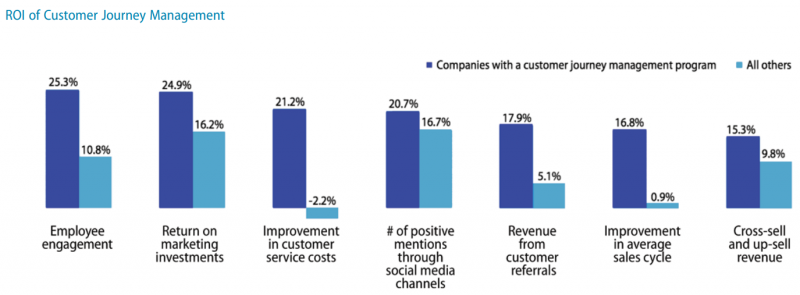
Figure 1. ROI of customer journey management. (Tincher & Newton, 2022, p. XII)
As shown in Figure 1 above, Tincher & Newton (2022) present seven topics that have been measured in companies that have a customer journey program versus companies that don’t have one. The graphs show great results, and the impacts are enormous if done correctly.
Conclusion
Customer journey mapping is a powerful tool for companies seeking to improve customer satisfaction and drive business growth. By identifying pain points and moments of truth, businesses can make targeted improvements that enhance the overall customer experience. Research shows that companies investing in customer journey management achieve higher loyalty, better financial results, and a stronger competitive advantage. Ultimately, customer journey mapping is not just about understanding customers – it is a strategic investment that drives growth and long-term business success.
Further Readings About the Subject
There are available books, journals, articles, and webpages about customer journey mapping and related topics. Two of these books were particularly valuable for Mård’s (2025) study and stood out for their content on customer journey mapping. We recommend them if you're interested in the subject.
- Angrave, J. (2020). The Journey Mapping: A Practical Guide to Preparing, Facilitating and Unlocking the Value of Customer Journey Mapping. Berlin/Boston: Walter de Gruyter GmbH.
- Mård, M. (2025). Uncovering Opportunities for Customer Experience Enhancements through Customer Journey Mapping. MBA Thesis in Digital Business and Management, Novia University of Applied Sciences.
- Tincher, J., & Newton, N. (2022). How Hard Is It to Be Your Customer? Using Journey Mapping to Drive Customer-Focused Change (2nd ed.). Rochester: Paramount Market Publishing, Inc.
About the authors

Mathias Mård is a department manager in production at one of the world’s leading manufacturers of luxurious sailing yachts, specialised in process development, lean, standardization, efficiency analysis, and leadership. Currently pursuing an MBA in Digital Business and Management at Novia University of Applied Sciences in Vaasa.

Rosmeriany is the supervisor and Head of the Master’s Degree Program in Digital Business and Management at Novia UAS.
The blog post has been reviewed by Novia's editorial board and accepted for publication on 10.12.2025.

Posta din kommentar