From the Hills of Nepal to the Nordics: Designing a Market Path for Handmade Woollen Products

Cover picture: Woman artisans knitting handmade woollen products in Nepal. Photograph by Jette Schroeder, used with permission (2025).
This is not just a thesis; this is a story woven from the hills of Nepal, women’s hands, and a dream of creating real opportunities.
Finland is known for its cold winters, minimalistic design, and an increasing trend towards products that are made ethically. This brought me to the question: Could handmade woollen items produced in Nepal find a good niche in the Finnish market?
For me, this question is not purely academic but is deeply personal. Growing up in the hills of Nepal, I have seen my mother knitting with so much passion and dedication. My mother, who has been knitting since her early teens, always thought that the craft of women could be more than a hobby. Knitting to her was independence, the means by which women could earn, maintain their families, and enhance their dignity.
Her ideas of empowering women with traditional skills influenced my entrepreneurial career and, further on, formed the basis of my study in Finland. As an MBA student in Service Design at Novia University of Applied Sciences, I was interested in finding out how these crafted, thoughtful products would find their way to the Finnish market, where design, sustainability, and authenticity are valued concepts.
Exploring the Market through Interviews and Co-Creation
To understand whether Nepalese handmade woollen products could find a meaningful place in Finland, I approached the question through the entire value chain. As a Service Design student, it felt important not to rely on a single perspective but to combine the voices of suppliers, importers, retailers, and consumers. This multi-layered approach allowed me to observe how expectations, challenges, and opportunities match or contradict across the system.
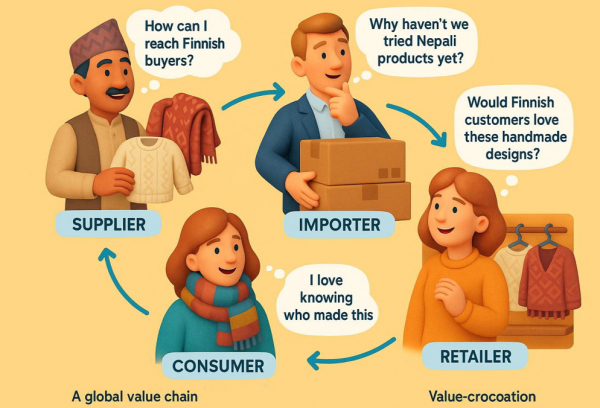
Figure 1. Stakeholder perspectives across the handmade wool value chain (Source: Author’s Sora illustration 2025)
To gather these insights, I conducted eight semi-structured interviews. Four interviews were with Nepalese suppliers: two were long-term industry contacts from my entrepreneurial background, while the other two were suppliers I reached out to them independently after discovering their businesses online. They kindly agreed to participate after I explained the purpose of my study.
Two German importers took part as well, one with whom my business has collaborated with previously, and another referred by her due to his long experience importing Nepali woollen goods. For the Finnish perspective, I contacted several retailers across Finland, but only two expressed interest in participating: a Finnish retailer and a US-based Finnish retailer. Both saw value in discussing the potential of Nepalese handmade woollen products.
To complement these expert insights, I organized a co-creation workshop on 10 October 2025 at Turku UAS. Ten participants joined, mostly Finnish students, along with a few international classmates. The session took place right after class in our usual classroom. I brought real product samples from Nepal (beanies, gloves, socks, and scarves) so participants could touch and evaluate them. Through guided activities including sensory evaluation, value card sorting, and group reflections, they provided feedback on comfort, design preferences, and emotional associations
Together, these interviews and the workshop guided the Discover and Define stages of the Double Diamond model. They also provided the foundation for developing Personas, Value Proposition Canvases, and a Business Model Canvas, assisting in converting the insights into practical strategies for the Nepalese producers.
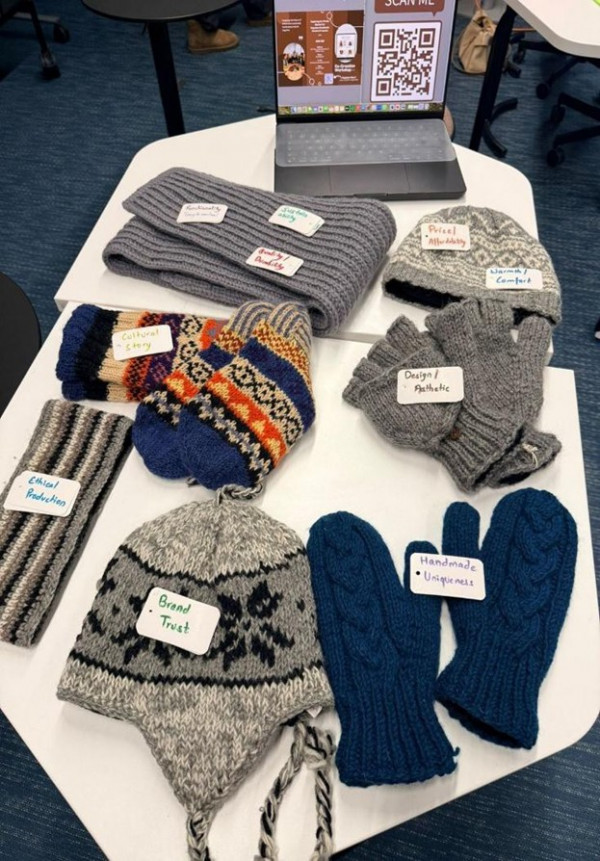
Product samples used in the co-creation workshop.
What Finnish Consumers Value
The workshop revealed a strong appreciation for authenticity. Participants described the products as warm, cozy, and natural. Many shared that knowing the items were handmade by women artisans in Nepal added emotional value.
However, they also pointed out practical expectations:
- Softer lining for greater comfort
- Neutral, minimalist colours
- Clear care and material information
- Stronger storytelling about artisan communities
For Finnish consumers, functionality and comfort are essential, but so is the story behind the product. They seek simplicity that feels honest, sustainable, and emotionally resonant.
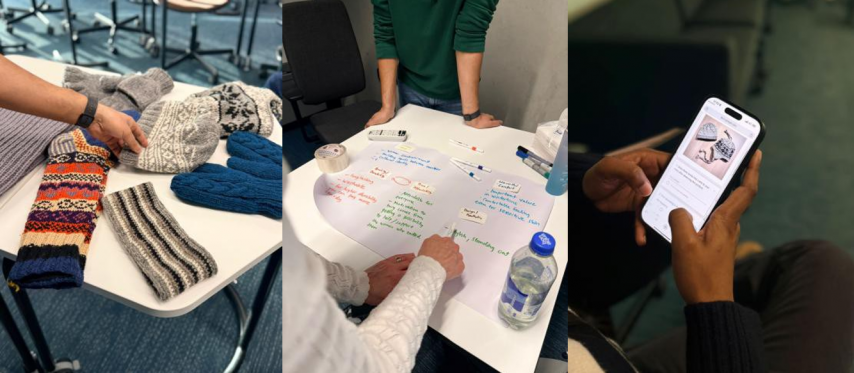
Glimpses of Co-creation Workshop.
What retailers and Importers Expect
Retailers and importers, on the other hand, focused more on operational needs, crucial for international trade:
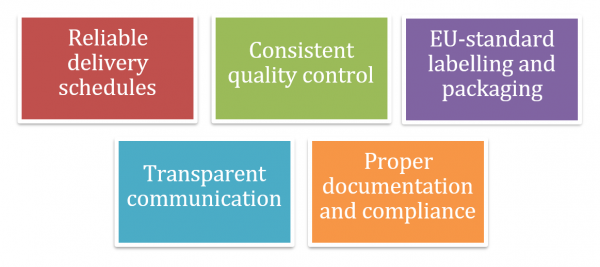
The above requirements build trust and form the foundation for long-term business relationships in Nordic markets.
Is Market Entry Possible?
The research shows that there is a promising niche market for Nepalese
handmade woollen products in Finland. The greatest potential lies in slow fashion, ethical winter wear, and culturally authentic lifestyle products.
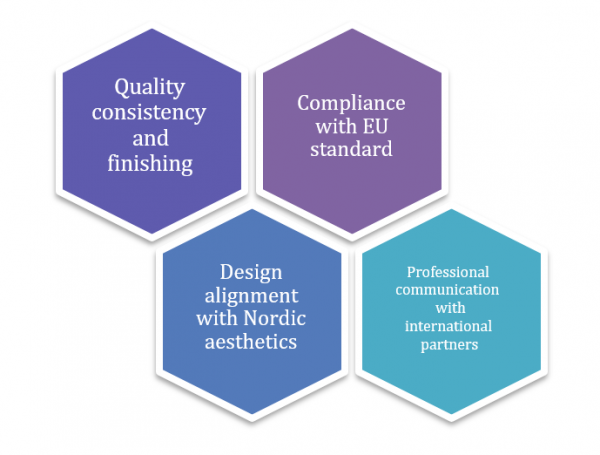
However, success will require thoughtful adaptation. Nepalese producers excel in craftsmanship and tradition, but need to strengthen quality, compliance, design, and communication.
A Roadmap for Moving Forward
Based on these learnings, I created a four-stage strategic roadmap on sustainable market entry:
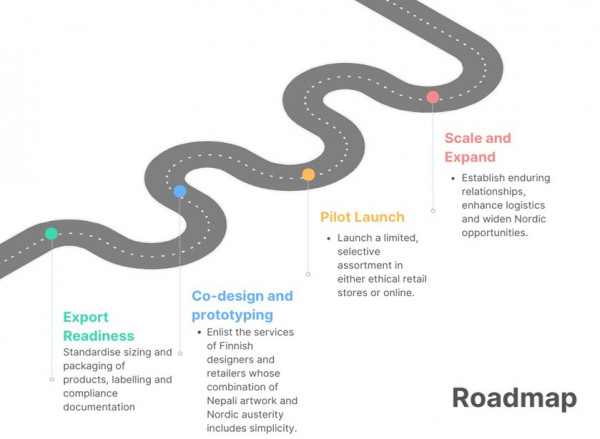
Figure 2. Roadmap for market entry created using Canva 2025 by author.
- Export Readiness: Standardise sizing and packaging of products, labelling, and compliance documentation.
- Co-Design and Prototyping: Enlist the services of Finnish designers and retailers, whose combination of Nepali artwork and Nordic austerity includes simplicity.
- Pilot Launch: Launch a limited, selective assortment in either ethical retail stores or online.
- Scale and Expand: Establish enduring relationships, enhance logistics, and widen Nordic opportunities.
Such an incremental strategy minimizes risk and builds capability and sustainability in the long run.
Why This Matters
This study is not only about a market exploration study, but it also functions as a cross cultural bridge. It demonstrates that traditional craftsmanship, with the help of a considerate design and teamwork, can perform successfully in the global markets. It also shows how small producers can be assisted by Service Design tools to become empathetic, ethical, and purposeful.
For me, the research journey was a reflection of both heritage and hope, connecting
my mother’s dream of empowering women through knitting, with the possibilities of modern design and sustainable business.
Nepalese handmade woollen goods can be an absolutely outstanding choice in Finland for their warmth and the stories of craftsmanship, endurance, and human values.
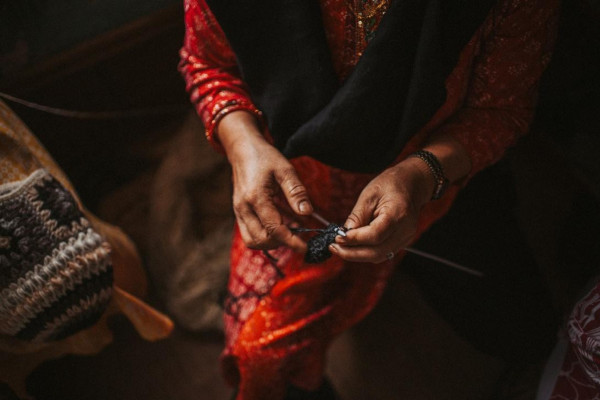
Photograph by Jette Schroeder, used with permission (2025).
Further Reading
Design Council UK (2019). The Double Diamond: A universally accepted depiction of the design process.
Osterwalder, A., Pigneur, Y., Bernarda, G., & Smith, A. (2014). Value Proposition Design: How to Create Products and Services Customers Want. John Wiley & Sons.
Niinimäki, K. (2020). Sustainable Fashion in a Circular Economy. Aalto University.
Vargo, S. L., & Lusch, R. F. (2008). Service-Dominant Logic: Continuing the Evolution. Journal of the Academy of Marketing Science, 36(1), 1–10.
Johanson, J., & Vahlne, J.-E. (2009). The Uppsala Internationalization Process Model Revisited: From Liability of Foreignness to Liability of Outsidership. Journal of International Business Studies, 40(9), 1411–1431.
About the Author

Sharada Shrestha is an MBA graduate in Service Design from Novia University of Applied Sciences. Originally from Nepal, she also holds a Master’s degree in Business Studies and has professional experience in business and finance. Her research focuses on exploring how Nepalese handmade woollen products can find a sustainable place in the Finnish market through service design and cross-cultural collaboration.
The blog post has been reviewed by Novia's editorial board and accepted for publication on 12.12.2025.

Posta din kommentar
Kommentarer
http://shop2.chuukr.cafe24.com/member/login.html?noMemberOrder=&returnUrl=https://theskysupply.com/forum/index.php?topic=4041.0 28 juli 2026 06:16 (8 timmar sen)
References:
Lollybet Casino Gutschein http://shop2.chuukr.cafe24.com/member/login.html?noMemberOrder=&returnUrl=https://theskysupply.com/forum/index.php?topic=4041.0
http://amarokforum.ru/ 28 juli 2026 06:08 (8 timmar sen)
References:
Lollybet Casino Live Casino http://amarokforum.ru/
https://skyblock.net/proxy.php?link=http://behired.eu/employer/deine-online-spielothek/ 28 juli 2026 04:46 (9 timmar sen)
References:
Lollybet Deutschland Login https://skyblock.net/proxy.php?link=http://behired.eu/employer/deine-online-spielothek/
forum.fpt.edu.vn 28 juli 2026 02:55 (11 timmar sen)
References:
Lollybet Casino Bonus https://forum.fpt.edu.vn/proxy.php?link=https://ashkert.am/%D5%A1%D5%B7%D5%AF%D5%A5%D6%80%D5%BF%D5%AB-%D5%B0%D5%A1%D5%B4%D5%A1%D6%80/spielothek-mit-live-casino-jackpots/
bravo.astroempires.com 27 juli 2026 06:14 (32 timmar sen)
References:
Lollybet Casino Spielautomaten https://bravo.astroempires.com/redirect.aspx?https://carrefourtalents.com/employeur/deine-online-spielothek/
http://images.google.co.nz/url?sa=t&url=http://www.theangel.fr/companies/lollybet-boni-aktionen-willkommensbonus-freiwetten-freispiele/ 27 juli 2026 05:51 (32 timmar sen)
References:
Lollybet Casino Auszahlungsdauer http://images.google.co.nz/url?sa=t&url=http%3A%2F%2Fwww.theangel.fr%2Fcompanies%2Flollybet-boni-aktionen-willkommensbonus-freiwetten-freispiele%2F
https://93.pexeburay.com 27 juli 2026 05:19 (33 timmar sen)
References:
Lollybet Casino Willkommensbonus https://93.pexeburay.com/index/d1?diff=0&utm_source=ogdd&utm_campaign=26607&utm_content=&utm_clickid=euc0k44s88s8448o&aurl=https%3A%2F%2Fpacificllm.com/notice/3692053
https://liveangarsk.ru/ 27 juli 2026 03:20 (35 timmar sen)
References:
Lollybet Kundenservice https://liveangarsk.ru/out?url=aHR0cHM6Ly9yZW1vdGVqb2JzLndlYnNpdGUvcHJvZmlsZS9rYXJvbHBhbGFmb3gyOA
truckers.wiki 24 juli 2026 08:59 (4 dagar sen)
References:
Indio casino https://truckers.wiki/forums/users/codymendenhall/
https://pacificllm.com/notice/3643777 24 juli 2026 08:36 (4 dagar sen)
References:
Latest casino bonuses https://pacificllm.com/notice/3643777
1 2 3 4 5 6 7 8 9 10 11 12 13 14 15 16 17 18 19 20 21 22 23 24 25 26 27 28 29 30 31 32 33 34 35 36 37 38 39 40 41 42 43 44 45 46 47 48 49 50 51 52 53 54 55 56 57 58 59 60 61 62 63 64 65 66 nästa »
Inga har kommenterat på denna sida ännu